The Argument
“The best path forward [for Cuba and the United States] is a negotiated deal in which Havana makes concessions substantial enough for Trump to sell as a victory, and in so doing staves off a humanitarian collapse and puts Cuba on the road to recovery,” argue Michael Bustamante and Ricardo Herrero in an essay for Foreign Affairs. “Anything short of that raises the risk of U.S. military intervention to stabilize a cratering economy and social unrest just 90 miles from Florida, an outcome both governments would prefer to avoid.”
Bustamante and Herrero acknowledge that for decades, Cuba’s leadership has viewed negotiating with Washington under pressure as a form of surrender. That belief is rooted in painful memories of occupations, interventions, and cycles of conflict with the United States since the late 19th century. But the authors argue that the crisis facing the island today is fundamentally different from those of the past.
Cuba has survived the collapse of the Soviet Union, the post-Cold War Special Period, successive rounds of U.S. sanctions over nearly seven decades, and recurring cycles of resource shortages. Yet Bustamante and Herrero contend that the gradual decay of Cuba’s patron-dependent economic model is the chief culprit of the looming collapse, one that has become impossible to ignore. The loss of Venezuelan oil, crumbling infrastructure, mass emigration, and mounting U.S. pressure have produced something deeper than a recession—they have exposed the state’s inability to sustain even minimal conditions for societal functioning.
Crucially, Bustamante and Herrero argue that a military intervention by the United States is not inevitable, but it does depend on Havana’s response. The Trump administration appears to want regime “movement” or compliance on key issues relevant to core U.S. national interests more than root-and-branch regime change. Washington has articulated clear terms: sweeping economic reforms, greater political freedoms, the release of high-profile political prisoners, reduced security ties with Russia and China, a path toward property claims resolution, and legalizing Starlink access. Cuba in turn could demand sanctions relief, and US investment into key industries such as mining, energy and tourism.
But there is a window, and it is closing. If Havana refuses to budge, the authors warn, the Trump administration may opt for military action to accomplish by force what negotiations could not achieve. The choice before Cuba’s leadership is no longer between negotiation and resistance. It is between negotiation and something far worse.
The Strategic Miscalculation
The authors document how Washington continues to signal that it may eventually take a more kinetic approach. Yet the Trump administration’s messaging at times seems mixed. Some voices openly discuss regime change, while other officials have explored a more gradual path inspired by the Venezuelan precedent—the search for a “Cuban Delcy,” an interlocutor capable of managing a controlled transition.
Cuba’s response, Bustamante and Herrero observe, has been predictable: resist, buy time, and wait for international circumstances to change. The strategy is understandable, they argue, but any confidence that time is on Havana’s side would be misplaced. The authors contend that even if resistance can be morally justified, the economic countdown is real and accelerating.
“A Slow Form of Suicide”
The authors reject the common explanation that Cuba’s paralysis stems from ideological rigidity alone. Instead, they argue that Cuba’s system functions as a coalition of institutions, interests, and power structures—each with its own survival imperative. GAESA wants to preserve economic dominance. The security services want to maintain ties with Russia and China. The Communist Party fears losing legitimacy. The aging leadership sees any opening as an existential threat. “What is surprising is how completely Cuba’s leadership has allowed these vetoes to drive its external strategy” the authors argue. “Every month of gridlock further depletes the reserves, infrastructure, and social patience that any Cuban government would need to govern. The logic of resistance is intelligible. It is also a slow form of suicide.”
The Rubio Factor
A key factor is Marco Rubio, who for years has been one of the strongest advocates of a hard line toward Cuba. That reputation may give him political cover that other leaders lack. Richard Nixon could open relations with China because no one questioned his anti-communist credentials. Rubio is no Nixon, and he operates under a far more unpredictable president, the authors note. “Still, if any gure in today’s Republican Party could unite Cuban American constituencies, congressional Republicans, and at least some Democrats in support of a phased and durable settlement with Havana, it would be him.”
The Cruel Irony
The authors draw a parallel to the beginning of the twentieth century, when delegates accepted deeply imperfect agreements with Washington not because they considered them fair, but because they understood that the leaders of a weakened states are sometimes forced to choose between two bad options.
They conclude, “Cuban people deserve a viable future. And the most logical, if cruelly ironic, path the Cuban authorities can take to save their country is to negotiate with the very power inflicting grievous damage on their economy: the United States, because it is also the only one that can realistically sponsor Cuba’s recovery. Change looks increasingly inevitable. The question is whether it comes through chaotic unraveling, violent foreign intervention, or a step-by-step transformation in which Havana still has a say.”
Read the full article on the Foreign Affairs website.
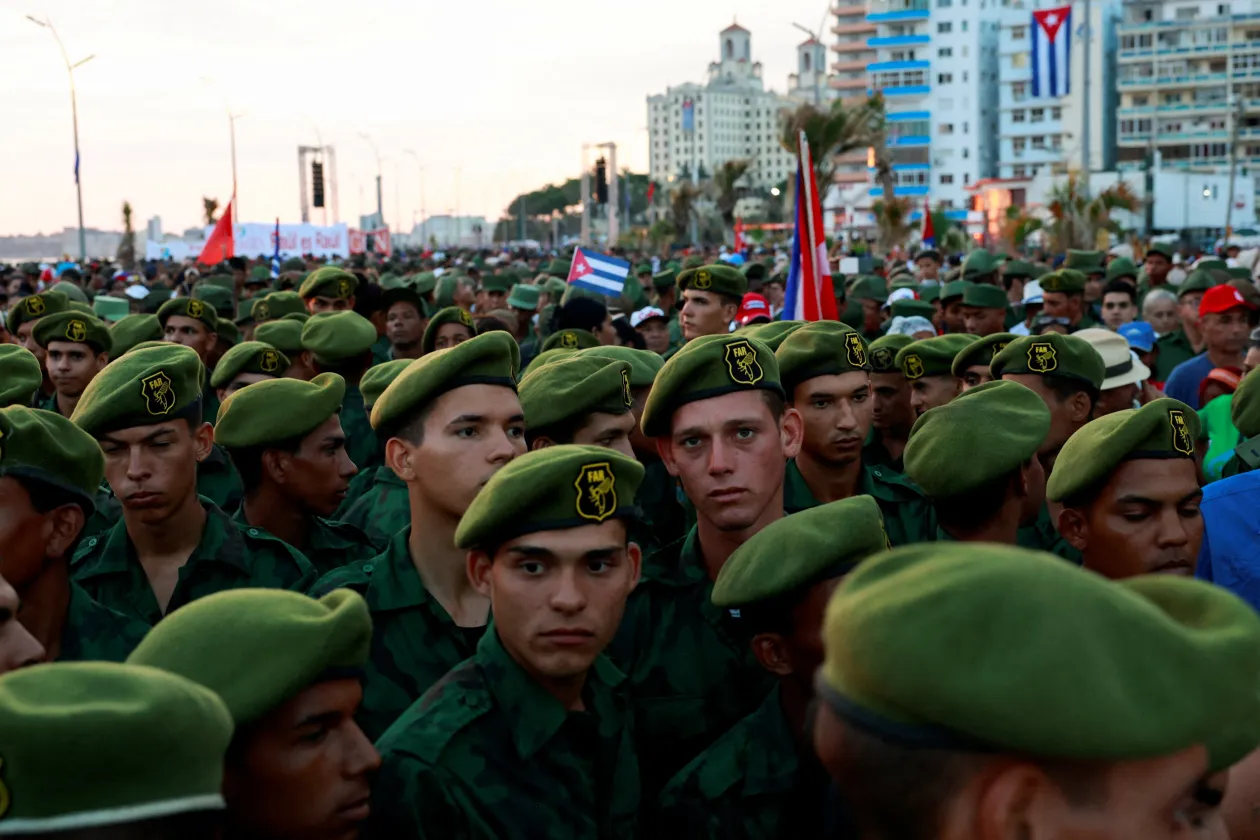
Photo credit: Norlys Pérez / Reuters